
Hackers Breached Air Force's Cloud One Platform, Cyber Command Called In, Reuters Reports
Hackers breached the Air Force's Cloud One platform, which hosts radar and munitions systems, Reuters reports. The Air Force declined to comment.
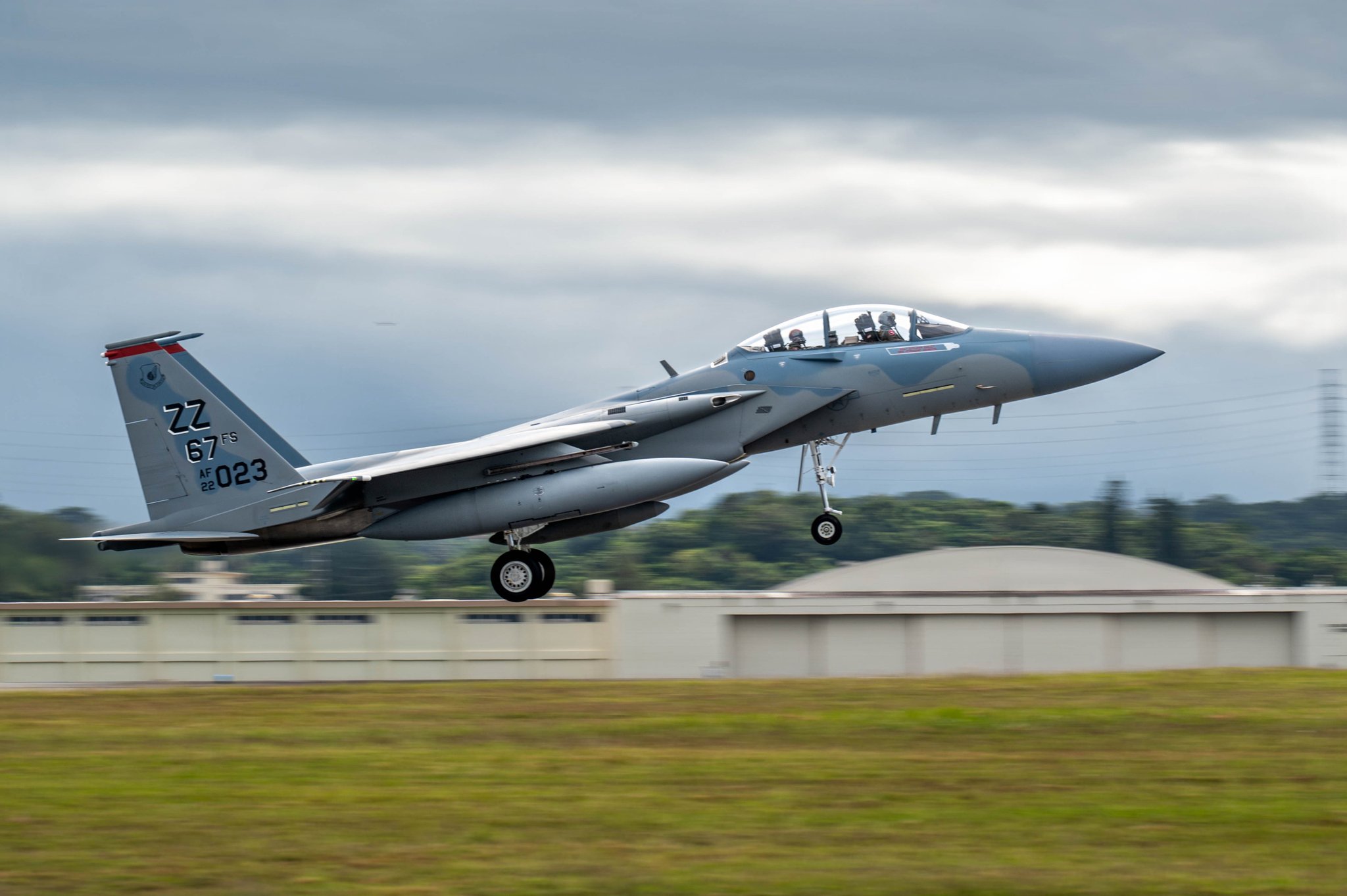
Hackers have broken into the U.S. Air Force's flagship cloud computing platform, Reuters reported Friday, citing three people familiar with the matter, in a breach that could put a vast amount of sensitive tactical, personnel and logistics data at risk.
The Air Force has not confirmed the intrusion at Cloud One, which two of the sources described as one of the U.S. military's biggest cloud platforms. Investigators have called in U.S. Cyber Command, the military's cyber force, to assess the damage, one source told Reuters.
"A breach here is a big deal," one of the sources said.
What we know so far
Two of the people told Reuters the intrusion was discovered within roughly the past month while crews were working to upgrade the system. Reuters said it could not establish who the hackers are, how far the intrusion reached or whether any data was stolen. No government agency or researcher has publicly attributed the breach to any country or group.
One source said the attackers exploited a software vulnerability to reach the platform's "control plane," the administrative layer that runs the cloud environment. That source compared the control plane to a "universal remote," saying intruders could in theory use that access to check the operational status of military aircraft or track the movement of spare parts. It is not clear whether the hackers did either, and Reuters could not identify the specific vulnerability.
In a statement to Reuters, the Air Force said it "does not comment on the security posture, vulnerabilities or operational status of specific networks and systems," adding: "We continuously take prudent measures to protect Department (of the Air Force) information, systems and mission capabilities."
Cyber Command did not respond to Reuters' requests for comment.
Why Cloud One matters
The Air Force created Cloud One in 2017 to serve as a one-stop shop for its IT needs. The platform draws on cloud services from four tech giants, Microsoft, Amazon, Oracle and Alphabet's Google, and runs scores of applications, including systems for personnel records, pay, logistics and maintenance.
Some of what runs on it ties directly to national defense. Reuters reported that the platform hosts the Air Force's Cloud-Based Command and Control system, which fuses air defense radar and other data feeds from across North America. It also hosts the Theater Integrated Combat Munitions System, which tracks bombs and missiles at more than 200 Air Force locations around the world.
The platform relies heavily on contractors. SAIC was the prime contractor until 2025, when Leidos took over. In December 2025, the Pentagon announced that Leidos had won a competitive task order worth up to $454.9 million for Cloud One architecture and shared services, running through October 2031. SAIC did not respond to Reuters, and Leidos referred questions to the Air Force.
Disruption across the platform
Reuters' sources described a range of disruption since the discovery:
- Efforts to move back-office applications onto Cloud One, a longstanding military priority, have been paused, according to two of the sources and a fourth person familiar with the matter.
- Updates to applications already running on the platform were blocked, leaving personnel unable to install fixes just as a new batch of serious software vulnerabilities was disclosed across the tech industry.
- Some users had their administrator rights revoked, a fifth source said.
All five sources spoke on condition of anonymity.
Other recent incidents
Reuters noted that the federal government is already dealing with the fallout from at least six other recently disclosed cyber incidents. Those include two at the FBI, an earlier hack of Pentagon data, a leak of Department of Homeland Security personnel information, a breach affecting at least two spy agencies and a hack at the Treasury Department.
The report also pointed to growing concern about AI-powered hacking, which poses a particular risk to cloud networks because AI models can quickly find weak spots across huge systems.
Cloud One's leaders have previously highlighted the platform's security. In a February 2023 commentary published by FedScoop, they cited a "100% success rate" against what they called a "staggering" 10 million attempts a year to penetrate the platform. "There is no room for error when it comes to security," they wrote.
The Air Force has good reasons not to discuss an active investigation in public, and nobody wants to hand an adversary a road map. But taxpayers spend hundreds of millions of dollars to keep systems like Cloud One secure, and this one carries data tied to the defense of North America and the movement of American munitions worldwide.
Congress and the American people deserve clear answers once the damage assessment is done: who got in, what they reached, and who will be held accountable for leaving the door open.
Sources
- https://www.cnbc.com/2026/11/27/hackers-breach-us-air-force-flagship-cloud-one-computing-platform.html
- https://www.bloomberg.com/news/articles/2026-11-27/hackers-breached-us-air-force-s-cloud-platform
- https://www.theverge.com/tech/1043775/hackers-reportedly-accessed-the-air-forces-cloud-system
- https://www.war.gov/News/Contracts/Contract/Article/4356793/contracts-for-dec-10-2025/
- https://x.com/i/trending/2126275266142212550
- https://x.com/usairforce/status/2121975748038623278
Related stories

Kilmar Abrego Garcia Voluntarily Leaves U.S. for Spain as DHS Says He 'Will NEVER Be Allowed Back'
Kilmar Abrego Garcia voluntarily left the U.S. for Spain after a 20-month deportation fight. DHS says he paid for his own flight and cannot return.

Unsealed Filing: Prosecutors Believe Rep. Ilhan Omar Committed Crimes 'Over Decades'; She Has Not Been Charged
Unsealed court records show prosecutors believe Rep. Ilhan Omar committed crimes "over decades." The offenses are redacted, and she has not been charged.

Biden-Appointed Judge Blocks Connecticut's ICE Mask Ban and Use-of-Force Rules
A federal judge blocked Connecticut from enforcing its mask ban and use-of-force rules against ICE and other federal agents, citing the Supremacy Clause.