
From Plymouth to the Fourth Thursday: How Thanksgiving Became a National Holiday
From the 1621 Plymouth harvest to Washington, Lincoln and FDR, here is what the records show about how Thanksgiving became a national holiday.
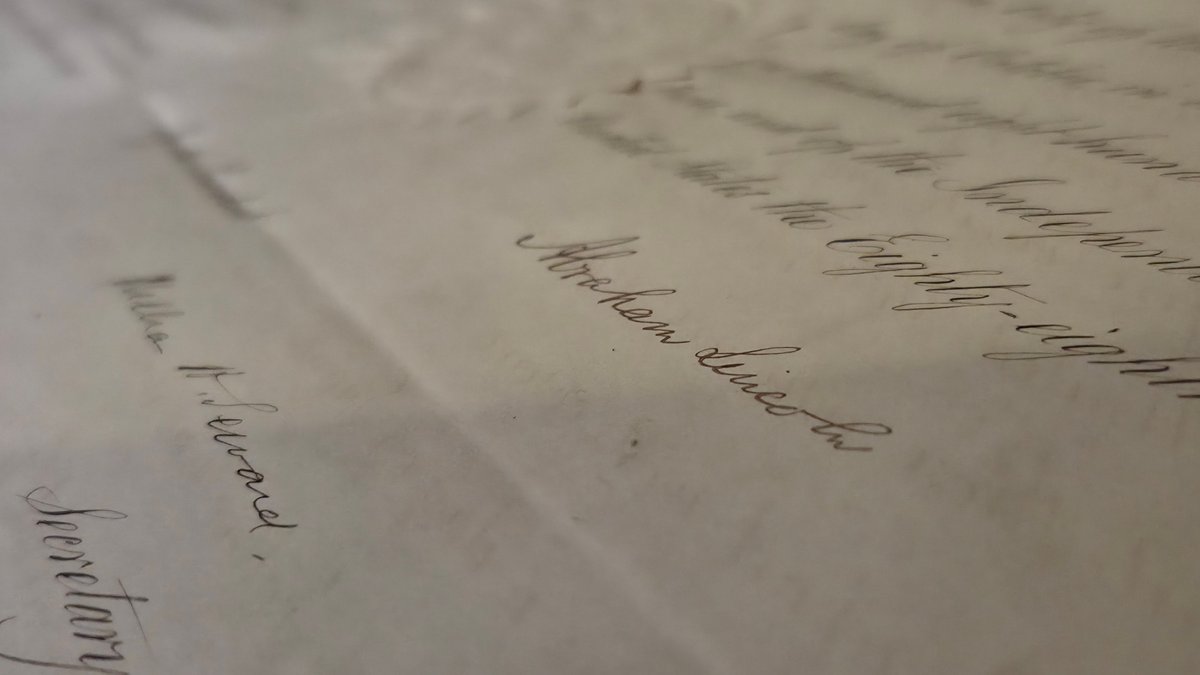
This year's Thanksgiving, Nov. 26, falls on the same calendar date as the first Thanksgiving proclaimed under the Constitution: Thursday, Nov. 26, 1789. The road from there to today's fixed holiday runs from Plymouth through three presidents and a magazine editor who lobbied for years.
The 1621 Harvest at Plymouth
Only two firsthand accounts of the 1621 celebration survive, according to the Pilgrim Hall Museum in Plymouth. Both were written from the colonists' perspective and do not record the Wampanoag view, the museum notes.
The fuller one is a letter by Edward Winslow, dated Dec. 11, 1621, and printed in London the next year in Mourt's Relation. In modern spelling, Winslow wrote that "our harvest being gotten in, our governor sent four men on fowling, that so we might after a special manner rejoice together, after we had gathered the fruits of our labors."
He described a visit by "their greatest king Massasoit, with some ninety men, whom for three days we entertained and feasted." The Wampanoag men "went out and killed five deer," which they presented to the governor and others. Winslow closed with a note of gratitude: "by the goodness of God, we are so far from want, that we often wish you partakers of our plenty."
Governor William Bradford's Of Plymouth Plantation gives a broader picture of that fall. He wrote that the colonists, "all well recovered in health and strength," had fish, fowl and "great store of wild turkeys, of which they took many, besides venison."
The Mayflower had reached Plymouth in December 1620. About half of its 102 passengers died that first winter, according to Plimoth Patuxet Museums and Bradford's own account. The Pilgrim Hall Museum notes the gathering also served diplomacy: the English needed to keep the mutual-aid alliance they had made that spring with the Wampanoag sachem Ousamequin, who held the title Massasoit.
What the Sources Do and Don't Say
Some popular details go beyond the record. Winslow wrote that the Wampanoag guests were entertained for three days, and that the colonists' bird hunt supplied food for almost a week. Neither Winslow nor Bradford calls the event a "thanksgiving." Winslow says "many of the Indians" came, but his letter does not say whether they were invited. The Pilgrim Hall Museum says much of what happened between the two groups remains unknowable. Turkey appears in Bradford's general description of that fall, while Winslow's letter names fowl and deer.
Washington Makes It National
The first federal step came in 1789. In late September, Congress asked President George Washington to recommend a day of public thanksgiving and prayer, according to the National Archives. On Oct. 3, he proclaimed Thursday, Nov. 26.
His proclamation opened: "Whereas it is the duty of all Nations to acknowledge the providence of Almighty God, to obey his will, to be grateful for his benefits, and humbly to implore his protection and favor."
Later presidents issued proclamations too, but the dates and even the months varied.
Sarah Josepha Hale's Long Campaign
Sarah Josepha Hale, editor of Godey's Lady's Book, campaigned for a fixed national day. On Sept. 28, 1863, the 74-year-old wrote to President Abraham Lincoln urging him to have the "day of our annual Thanksgiving made a National and fixed Union Festival." She told him she had pressed the cause for 15 years.
Lincoln's Wartime Proclamation
Lincoln acted within days. On Oct. 3, 1863, in the middle of the Civil War, he invited Americans "in every part of the United States, and also those who are at sea and those who are sojourning in foreign lands," to observe the last Thursday of November "as a day of Thanksgiving and Praise to our beneficent Father who dwelleth in the Heavens."
From then on, the National Archives notes, Thanksgiving was regularly kept each year on the last Thursday of November.
FDR's Date Change and the 1941 Law
That tradition changed in 1939, when the last Thursday fell on Nov. 30. Hoping a longer Christmas shopping season would help retailers and the economic recovery, President Franklin D. Roosevelt moved the holiday up a week, to Nov. 23. The states did not all follow. In 1939, 23 states and the District of Columbia went along, 22 kept Nov. 30, and three (Colorado, Mississippi and Texas) observed both dates, according to the FDR Foundation and The Washington Post.
Roosevelt repeated the change in 1940 and 1941. In 1940, 32 states followed him and 16 held to the traditional date, according to The Washington Post and the National Archives' Prologue magazine.
Congress then fixed the date. The House passed a resolution on Oct. 6, 1941, naming the last Thursday of November. The Senate amended it to say the fourth Thursday, so the date would not shift in Novembers with five Thursdays. Roosevelt signed it on Dec. 26, 1941. It applies to every year after 1941, and Thanksgiving has fallen on the fourth Thursday since 1942.
Across four centuries, the thread is gratitude: for a harvest, a new government and a Union preserved. It is a heritage worth keeping at the table today.
Sources
- https://www.pilgrimhall.org/thanksgiving-national-day-of-mourning/the-first-thanksgiving/
- https://www.archives.gov/legislative/features/thanksgiving
- https://founders.archives.gov/documents/Washington/05-04-02-0091
- https://www.abrahamlincolnonline.org/lincoln/speeches/thanks.htm
- https://x.com/USNatArchives/status/2115828786415472818
Related stories
The Greatest Conservative Films: Unforgiven (1992)
Eric M. Blake analyzes Clint Eastwood's "Unforgiven," emphasizing its genre deconstruction, Western tropes, and underlying conservative themes, particularly gun control.
Brave The Dark
With February offering a dismal selection of entertaining movies, I found myself browsing one of my many streaming services, landing on Angel Studios. A particular film kept catching my eye…
The Greatest Conservative Films: The Green Berets (1968)
In the general category of “underrated films”, there’s a tragic subset of “misremembered”. The Green