Trump Administration Posts 248 USAID Files on Agency's Contacts With Meta, Google and YouTube; Democrats Seek Removal of Files With Personal Data
The administration posted 248 USAID files on the agency's dealings with Meta, Google and YouTube. Two Democrats asked it to remove files with personal data.
The Trump administration has posted 248 internal U.S. Agency for International Development (USAID) documents online. Many concern the agency's work on disinformation and its contacts with Meta, Google and YouTube. Two congressional Democrats have asked the administration to remove files that they say contain personal information. Sen. Eric Schmitt (R-Mo.) rejected the request.
What was released
The files went up Tuesday, Nov. 24, on the agency's website, USAID.gov, which had shown only placeholder text since the agency was dismantled in 2025. The relaunched site is titled "USAID Files." Its homepage lists 248 items, including emails, memos, chat logs, concept notes, program reviews, briefings and videos, and says: "Under previous administrations, USAID was weaponized to advance a radical agenda fundamentally at odds with American values. In the interest of transparency and accountability, we are publishing files, memos, and internal communications detailing how the agency operated."
The New York Post reported that Edward Coristine, a former Department of Government Efficiency staffer, announced the release on X, and that the 1.1-gigabyte collection runs mostly from 2021 to 2024. The Post said some of the material had already been public. The Organized Crime and Corruption Reporting Project (OCCRP) reported that the files deal largely with the agency's media support, democracy promotion and anti-corruption programs.
The State Department told OCCRP it was not involved in the publication but "welcomes this release." OCCRP reported that Office of Management and Budget Director Russell Vought has suggested on X that more files are coming.
Many of the documents are drafts, proposals or meeting notes, and the files do not always show whether an idea was carried out, according to the Post and Newsweek.
What the documents show
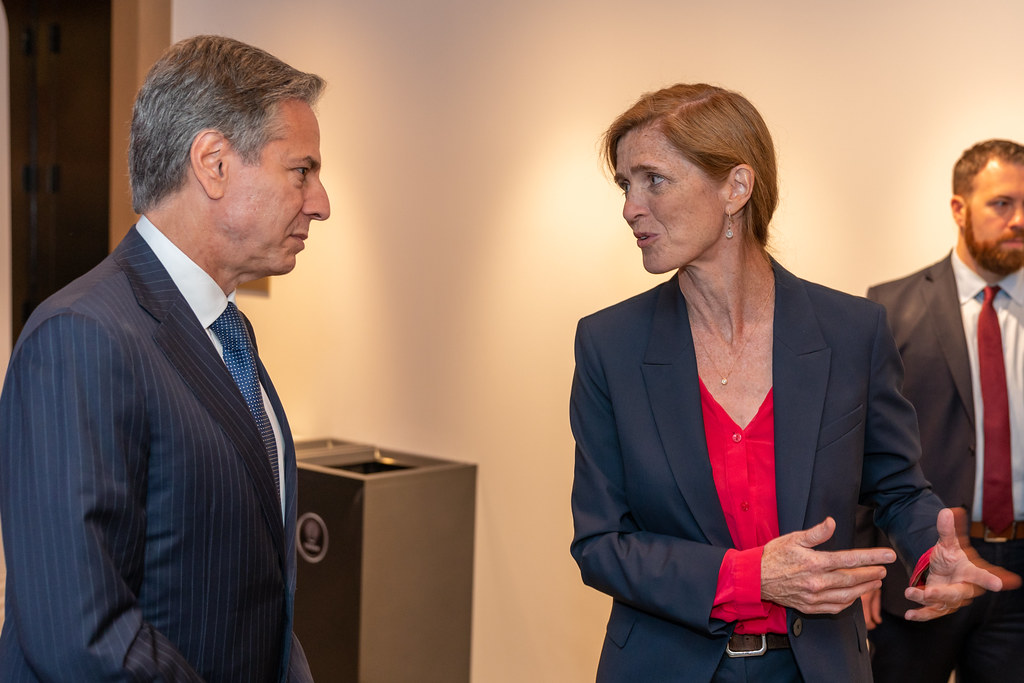
A meeting with no public readout. In June 2024, USAID's press office asked staff to draft a readout of then-Administrator Samantha Power's meeting with Meta's president of global affairs. A staffer relayed that technical experts in the agency's democracy bureau "flagged that there should be no public amplification of this meeting." An agency lawyer wrote that a readout would raise concerns "due to Hill sensitivities and the ongoing Supreme Court litigation related to communications with social media companies." She added that the engagement "falls on the correct side of the line, but a press readout would invite inquiries and scrutiny from a number of places." The press office had asked why, noting it had recently put out readouts of similar meetings. It then replied: "we are not doing a readout for this one."
A request to Meta about posts in Guatemala. On Nov. 30, 2022, a USAID democracy team lead emailed Meta contacts under the greeting "Dear FB friends." The email asked the company to "look into" Facebook posts by a group called Fundación Contra el Terrorismo that targeted Guatemalan Judge Yassmin Barrios. The email said Power had raised concern about threats against the judge, and that in the Guatemalan context the post "should be understood as a threat." On Dec. 5, Meta replied that the page as a whole did not violate its standards, but that one flagged post violated its violence and incitement policy and was removed. Marcela Escobari, then head of USAID's Latin America bureau, thanked Meta and said USAID would share the case with leadership as an example of "how we're working together expeditiously on these cases."
"Trusted" reporting channels. On March 15, 2022, a Meta policy executive wrote to a USAID democracy official about "how we might involve USAID in its expansion" of Meta's Trusted Partners program, which gives outside organizations a faster way to report content to Facebook. She said many USAID civil society partners were "likely already part of the program." Meta's description of the program, attached to the email, says it removes only content that violates its Community Standards. In August 2022, a USAID official told Internews, a media nonprofit, that YouTube had asked for a list of local groups to consider for its "Trusted Flagger" program. An Internews adviser said the group would not send a list of partner contacts, and added: "between various partners and sub-awards I am pretty sure USAID is currently funding a lot of staff around the world to flag issues to the platforms through these trusted programs." That statement is the adviser's belief and is not an accounting of funded staff.
Notes on a 2023 meeting with Meta. A draft marked "predecisional" includes notes from a Sept. 7, 2023, group meeting ahead of a planned "reset" with Meta. The notes say to use agendas and talking points cleared with agency lawyers "so we have a paper trail of all the conversations we have in case needed for a legal reason," and to "encourage direct collaboration between platforms and partners, so we are not part of the conversation." The same notes say "content moderation referrals are different than content moderation direction" and that staff did not want to "cross the line into a directive."
A proposal from the Global Disinformation Index. In an August 2022 concept note prepared for USAID, the Global Disinformation Index (GDI), a U.K.-based nonprofit that rates websites for disinformation risk, said its exclusion list of more than 2,500 sites was embedded in the systems of 13 ad tech companies. GDI proposed reviewing news markets in Moldova, Zambia and Armenia. It also proposed working with USAID to guide platform action to "defund," "downrank" and "deplatform" the highest-risk outlets in those countries. The Post reported that the files show no sign USAID paid for the project. GDI received a $100,000 subgrant in 2021 through a State Department Global Engagement Center grantee, according to federal court filings. GDI said in those filings the money went to expanding its technology to languages used in East Asia and Europe and that the grant's purpose did not include U.S. media. Newsweek said it asked GDI, Meta and Google for comment.
Legal guidance to staff. Talking points for a July 2024 presentation by an agency lawyer tell staff: "Keep it factual. Keep it out of the Washington Post." They also say to write emails and chats "as if you expect them to get FOIA'd or requested by the Hill" because "the default is disclosure." The same talking points say any USAID work in this area "must be viewpoint neutral" and that the agency "cannot be perceived to be policing public opinion."
Reaction
Sen. Jeanne Shaheen (D-N.H.) and Rep. Gregory Meeks (D-N.Y.), the top Democrats on the Senate Foreign Relations and House Foreign Affairs committees, wrote to Secretary of State Marco Rubio and acting USAID Administrator Bill Woolf on Nov. 25. They said links posted the night before included personally identifiable information and possibly other sensitive data "in likely contravention of federal law and regulations." They urged the officials to "immediately remove any files containing PII and sensitive information." They also called the release "selective" and said it "serves no purpose other than to sow disinformation." The letter does not call for the whole archive to come down.
Power told Devex the release was "248 cherry-picked files of webinars, staff chat logs, and meetings with tech companies," with "nothing that backs up their false, sweeping claims of fraud and abuse." She said the files show "USAID staff working diligently and transparently, as directed by Congress." Lauren Harper of the Freedom of the Press Foundation said the release was "more performative than informative."
Schmitt posted on X, "No way. It's time to end the grift," alongside the Democrats' letter. He has also called USAID "a slush fund" for the foreign policy establishment and said the Justice Department should investigate further.
Meta, Google and YouTube had not publicly addressed the files in the reporting reviewed for this story.
Background
Several of the documents refer to Murthy v. Missouri, a challenge to federal contacts with social media companies. On June 26, 2024, the Supreme Court ruled 6-3 that the challengers lacked standing, without deciding the merits.
Sources
- https://www.usaid.gov/
- https://nypost.com/2026/11/25/us-news/damning-usaid-files-reveal-just-how-biden-officials-weaponized-now-shuttered-agency/
- https://www.usaid.gov/files/gdi-usaid-concept-note-august-2022-293a61098fd0.pdf
- https://www.foreign.senate.gov/press/dem/release/shaheen-meeksdemand-answers-on-administrations-selective-release-of-usaid-files
- https://www.devex.com/news/exclusive-ex-administrator-samantha-power-responds-to-usaid-file-release-113982
- https://breitbart.news/usaid-files-sen-eric-schmitt-rejects-democrat-removal-demand/
- https://x.com/SenEricSchmitt/status/2126515551061074062
- https://www.washingtonexaminer.com/news/justice/4815974/eric-schmitt-doj-investigation-usaid-files/
- https://www.washingtonpost.com/national-security/2026/11/27/trump-administration-reboots-usaid-website-with-unredacted-memos-emails/
- https://reclaimthenet.org/usaid-files-the-trusted-flaggers-nobody-can-audit
- https://thebostonreport.com/2026/11/24/usaid-files-disinformation-meta-youtube-google/
- https://www.flickr.com/photos/statephotos/52372561278/
Related stories
Epstein Files Released?
On Thursday, Attorney General Pam Bondi released files relating to Jeffery Epstein. The files were
Reflections on the State of the Union
The State of the Union is on everyone's mind today. Freda Donnelly takes a deep dive into a speech that had many twists and turns.
Ronna McDaniel Steps Down as RNC Chair
Ronna McDaniel announced she will be step down as chairman of the RNC this spring. Take a look at her tenure & future RNC chair candidates.